Buying Roofing Leads vs Fixing Your Website: Which Gets Better ROI
At $187/lead from Google Ads, roofers spend $9K+ per closed job. A one-time website fix costs $500-$2,000 and keeps producing leads for years.
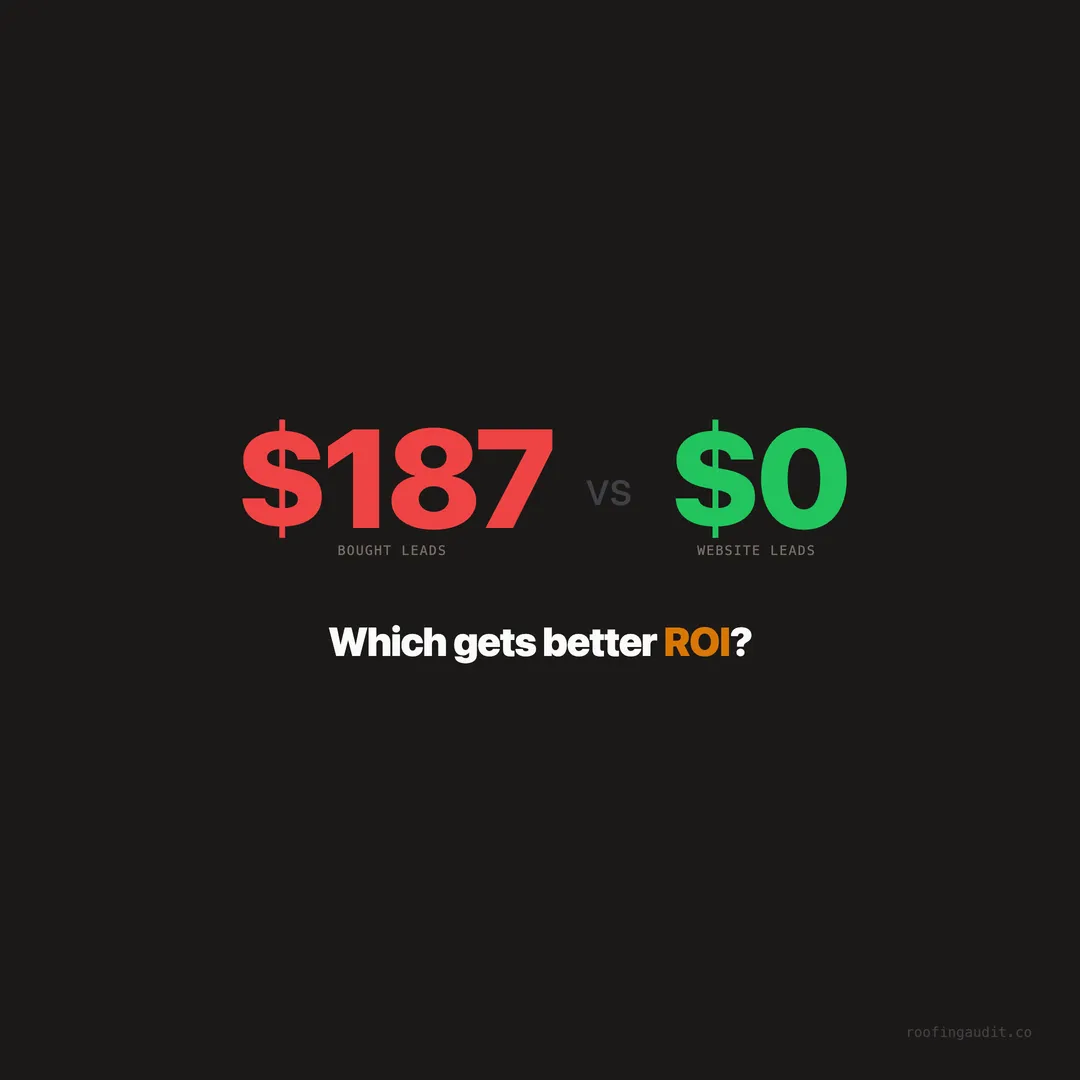
A roofing company in Tampa spends $4,000 per month on Google Ads. At $187 per lead, that buys roughly 21 leads per month. At a 30% close rate, that’s 6-7 jobs. Revenue looks healthy — until you realize the company is spending $48,000 per year on a channel that stops producing the moment you stop paying.
Another roofer in Dallas spent $1,800 fixing their website — better CTAs, a storm damage gallery, insurance claim content, and proper schema markup. The site now generates 12-15 organic leads per month at a cost of $0 per lead. That one-time investment paid for itself in the first month and will keep producing for years.
When we audited 1,409 roofing websites across Texas, Florida, and Georgia, the pattern was clear: roofers who invest in their websites first and advertising second consistently outperform those who do it backward. The math isn’t even close.
The True Cost of Buying Leads
Lead costs in roofing have been climbing for years. Here’s where things stand in 2026:
| Lead Source | Cost Per Lead | Leads/Month ($4K budget) | Shared? | You Own the Lead? |
|---|---|---|---|---|
| Google Ads | $187 | 21 | No | Yes |
| Google LSA | $45-$120 | 33-89 | No | Yes |
| Angi | $50-$150 | 27-80 | Yes (3-5 roofers) | No |
| Thumbtack | $40-$100 | 40-100 | Yes (3-5 roofers) | No |
| HomeAdvisor | $30-$80 | 50-133 | Yes (4-6 roofers) | No |
| Your website (organic) | $0 | Unlimited | No | Yes |
The “your website” row isn’t theoretical. It’s what happens when a roofing site ranks for local search queries — queries like “roof replacement [city],” “storm damage repair near me,” and “roofing company [neighborhood].” These clicks are free. The leads are exclusive. And the channel never turns off.
But here’s the critical part: organic leads only come from websites that are built to rank and convert. The average roofing website in our audit is missing 32% of the elements that generate leads. These sites don’t rank, don’t convert, and force the owner to buy every lead from paid channels.
Platform Dependency Is a Business Risk
When you buy leads from Google Ads, Angi, or Thumbtack, you’re building your business on rented ground. This creates three specific risks:
Price increases are outside your control. Google Ads CPCs for roofing keywords have increased 18-25% per year over the past three years. In 2023, the average roofing lead cost $142. In 2026, it’s $187. By 2028, projections suggest $230-$260 per lead. Your costs go up every year regardless of what you do.
Platform changes can eliminate your leads overnight. Google regularly changes its ad algorithms, quality score requirements, and local pack rankings. Roofers who built their entire pipeline on Google Ads have seen lead volumes drop 40-60% after algorithm updates — with no warning and no recourse.
You’re competing against yourself. Every dollar you spend on Google Ads increases the auction price for roofing keywords in your market. Your competitors do the same. The result is an arms race where everyone pays more and nobody gains a lasting advantage. The only winner is Google.
Your website is the only marketing asset you fully own. It doesn’t charge per lead. Its costs don’t increase with competition. And no platform can take it away from you.
What a Website Fix Actually Costs
When we say “fix your website,” we’re not talking about a $15,000 redesign. We’re talking about targeted improvements that directly impact lead generation. Based on the gaps we found across 1,409 roofing sites:
Free Estimate CTA (above the fold): $0-$100. 31% of sites are missing this. Adding a prominent “Free Estimate” button takes minutes and immediately impacts conversion rate.
Storm damage gallery: $100-$300. 31% of sites have no project photos. Upload 10-15 photos of completed storm damage repairs with captions noting the project type and location.
Insurance claim content: $200-$500. 30% of sites have no insurance guidance. A single page explaining the claims process captures high-intent search traffic from homeowners who already have damage.
Emergency repair page: $100-$200. A dedicated emergency page with after-hours phone number and response time captures urgent leads that pay premium pricing.
Schema markup: $0-$200. Proper LocalBusiness and Service schema helps Google understand and display your business in local results.
Mobile optimization: $200-$500. 68% of roofing leads start on mobile. If your site doesn’t load in under 3 seconds on a phone, you’re losing more than half your traffic.
Total investment: $500-$2,000 for most sites. One-time. Compare that to $48,000+ per year in Google Ads.
The Math That Changes Everything
Let’s model two roofers in the same market — Houston, TX — over 12 months:
Roofer A: Buys All Leads
- Google Ads budget: $4,000/month ($48,000/year)
- Cost per lead: $187
- Leads per month: 21
- Close rate: 30%
- Jobs per month: 6.3
- Average job value: $12,000
- Annual revenue from ads: $907,200
- Annual ad cost: $48,000
- Cost per closed job: $635
Roofer B: Fixes Website, Then Adds Targeted Ads
- Website fix: $1,800 (one-time)
- Organic leads (after fix): 12-15/month (free)
- Google Ads budget: $2,000/month ($24,000/year, targeted)
- Paid leads per month: 10-11
- Total leads per month: 22-26
- Close rate: 30%
- Jobs per month: 6.6-7.8
- Annual revenue: $950,400-$1,123,200
- Annual marketing cost: $25,800 (website + ads)
- Cost per closed job: $275-$325
Roofer B generates more leads and more revenue while spending $22,200 less per year on marketing. Over 5 years, that’s $111,000 in savings — enough to buy a new truck, hire another crew member, or reinvest in growth.
The difference isn’t talent. It’s strategy. Roofer B fixed the leaky bucket before pouring water into it.
Why Roofers Keep Buying Leads Instead of Fixing the Site
If the math is so clear, why do most roofers still spend heavily on paid leads? From our observations auditing 1,409 sites, three patterns emerge:
Instant gratification bias. Google Ads produce leads within hours of turning on the campaign. Website improvements take weeks to months to show results in organic rankings. Roofers who need leads today choose the fast option — even though it’s the expensive one. The top-performing roofers play the long game.
The agency lock-in. Many roofers work with marketing agencies that manage their Google Ads. Those agencies earn a percentage of ad spend — typically 15-20%. They have a financial incentive to increase ad budgets, not to fix the website and reduce dependency on ads. The roofer trusts the agency, and the agency recommends more ads.
Underestimating the website’s potential. Most roofers see their website as a brochure — a place to list services and a phone number. They don’t realize it can be a lead generation machine that works 24 hours a day, 7 days a week, without a monthly bill. That mindset shift is the biggest barrier.
The Owned Asset Advantage
Here’s a concept that most roofers haven’t considered: your website is the only marketing asset you truly own.
Google Ads: Google owns the platform, sets the prices, and can change the rules at any time. You’re a tenant.
Angi/Thumbtack: These platforms own the customer relationship. They sell the same lead to your competitors. You’re one of many.
Social media: Facebook, Instagram, and TikTok control your reach. Organic reach has declined 70%+ since 2018. You’re playing on someone else’s field.
Your website: You own the domain. You own the content. You own the leads. You own the data. Nobody can raise your rates, share your leads, or throttle your traffic.
Building on your website is like owning property. Building on platforms is like renting. Both can work, but only one builds equity over time.
The Right Order of Operations
Based on our data from 1,409 sites, here’s the order that produces the best ROI:
Step 1: Fix the website (Week 1-2). Address the conversion killers first. Add a Free Estimate CTA, build a storm damage gallery, create an insurance claim page, add an emergency repair page, and implement schema markup. Cost: $500-$2,000.
Step 2: Build content (Month 1-3). Create service-area pages for every city you serve. Add blog content targeting long-tail roofing queries. Optimize for local SEO with Google Business Profile consistency. Cost: $0-$1,000 (or your time).
Step 3: Add targeted ads (Month 3+). Once the website converts at 4-5%+, add Google Ads for high-intent keywords. Now every ad dollar goes further because the website actually converts the traffic. Budget: $2,000-$3,000/month (half what you’d spend without the website fix).
Step 4: Reduce ad dependency over time. As organic rankings improve, organic leads increase. Shift ad budget toward supplementing organic traffic, not replacing it. Over 12-18 months, many roofers reduce ad spend by 40-60% while maintaining or increasing total lead volume.
This is the strategy that the top 3% of roofing websites follow. They don’t avoid ads — they use ads strategically, on top of a website that already generates leads organically.
What Happens When You Stop Buying Leads
Every roofer who depends on paid leads has a quiet fear: what happens if I stop paying?
The answer, if your website hasn’t been fixed, is simple — leads stop. Your phone goes quiet. Your pipeline dries up. You’re back to cold-calling and driving neighborhoods after storms.
The answer, if your website has been built to generate organic leads, is different — nothing changes. The organic leads keep coming. The phone keeps ringing. Your pipeline stays full because Google is still sending traffic to your content, your galleries, and your service pages.
That’s the difference between a business built on rented ground and a business built on owned ground. One is fragile. The other is resilient.
Stop Renting Your Lead Pipeline
The $187 per lead number isn’t going down. Google Ads will keep getting more expensive. Lead platforms will keep raising prices and sharing leads with more competitors. The only lead channel that gets cheaper over time is your own website.
A $500-$2,000 website fix is not a marketing expense. It’s an investment in an asset that appreciates — an asset that generates leads for years, builds SEO equity, and reduces your dependency on platforms that don’t have your interests at heart.
The roofers who figured this out early are the ones with full schedules. The roofers who keep buying leads without fixing their websites are the ones who’ll spend $291,000+ over five years and have nothing to show for it when they stop.
Fix the website. Then buy the leads you actually need — not the ones you’re forced to buy because your site can’t generate them on its own.
Keep reading
Want to know your score?
Drop your URL — full report in 48 hours.
We're on it.
Report in your inbox within 48 hours.